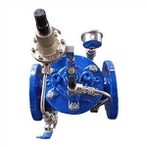
The material of the main parts of the valve should first consider the physical properties (temperature, pressure) and chemical properties (corrosivity) of the working medium. Also, know how clean the media is (with or without solid particles). In addition, it is necessary to refer to the relevant regulations and requirements of the country and the user department.
A variety of materials can meet the requirements of the valve in a variety of different working conditions. However, the correct and reasonable selection of valve materials can obtain the most economical service life and best performance of the valve.
There are many kinds of valve materials, which are suitable for various working conditions. Now the commonly used valve body material, trim material and sealing surface material are introduced as follows.
Commonly used materials for valve bodies
1. Gray cast iron gray cast iron valve is used in various fields of industry due to its low price and wide application range. They are usually used in the case of water, steam, oil and gas as the medium, and are widely used in chemical industry, printing and dyeing, oil chemical, textile and many other industrial products that have little or no effect on iron pollution.
It is suitable for low pressure valves with working temperature between -15~200℃ and nominal pressure PN≤1.6MPa.
2. Black-heart malleable cast iron is suitable for medium and low pressure valves with a working temperature between -15 and 300°C and a nominal pressure of PN ≤ 2.5MPa.
The applicable medium is water, sea water, gas, ammonia, etc.
3. Ductile iron Ductile iron is a type of cast iron. In this cast iron, spheroidal or spheroidal graphite replaces the flake graphite in gray cast iron. This change in the internal structure of the metal makes its mechanical properties better than ordinary gray cast iron, and does not damage other properties. Therefore, valves made of ductile iron can be used at higher pressures than those made of gray cast iron. It is suitable for medium and low pressure valves with a working temperature between -30 and 350°C and a nominal pressure of PN≤4.0MPa.
The applicable medium is water, sea water, steam, air, gas, oil, etc.
4. Carbon steel (WCA, WCB, WCC) initially developed cast steel to meet the production needs that exceed the capacity of cast iron valves and bronze valves. However, due to the good overall performance of carbon steel valves and the high resistance to stress caused by thermal expansion, impact load and pipeline deformation, its use range is expanded, usually including the working conditions of cast iron valves and bronze valves. .
Suitable for medium and high pressure valves with working temperature between -29~425℃. Among them, the temperature of 16Mn and 30Mn is between -40 and 400 °C, which are often used to replace ASTMA105. The applicable medium is saturated steam and superheated steam. High temperature and low temperature oil, liquefied gas, compressed air, water, natural gas, etc.
5. Low temperature carbon steel (LCB) Low temperature carbon steel and low nickel alloy steel can be used in the temperature range below zero, but cannot be extended to cryogenic areas. Valves made from these materials are suitable for media such as seawater, carbon dioxide, acetylene, propylene and ethylene.
It is suitable for low temperature valves with working temperature between -46~345℃.
6. Valves made of low alloy steel (WC6, WC9) low alloy steel (such as carbon molybdenum steel and chromium molybdenum steel) can be applied to many kinds of working media, including saturated and superheated steam, cold and hot oil, natural gas and air. The working temperature of carbon steel valve can reach 500℃, and the low alloy steel valve can reach above 600℃. At high temperature, the mechanical properties of low alloy steel are higher than that of carbon steel.
It is suitable for high temperature and high pressure valve of non-corrosive medium with working temperature between -29~595℃; C5 and C12 are suitable for high temperature and high pressure valve of corrosive medium with working temperature between -29~650℃.
7. Austenitic stainless steel Austenitic stainless steel contains about 18% chromium and 8% nickel. 18-8 austenitic stainless steel is often used as a valve body and bonnet material for high and low temperature and highly corrosive conditions. Adding molybdenum to 18-8 stainless steel and slightly increasing the nickel content substantially increases its corrosion resistance. Valves made of this steel can be widely used in chemical industry, such as conveying acetic acid, nitric acid, alkali, bleaching liquid, food, fruit juice, carbonic acid, tanning liquid and many other chemical products.
In order to apply to the high temperature range and further change the material composition, niobium is added to this stainless steel, which is known as 18-10-Nb, and the temperature can be used up to 800 ℃.
Austenitic stainless steel is usually used at very low temperatures without becoming brittle, so valves made of this material (such as 18-8 and 18-10-3Mo) are very suitable for low temperature operation. For example, liquid gases such as natural gas, biogas, oxygen and nitrogen are transported.
It is suitable for valves with corrosive media whose working temperature is between -196 and 600 °C. Austenitic stainless steel is also an ideal material for cryogenic valves.
8. Monel alloy 'Monel' is a high nickel-copper alloy with good corrosion resistance. This material is often used in valves conveying alkalis, salt solutions, foods, and many airless acids, especially sulfuric and hydrofluoric acids. 'Monel' alloys are very suitable for steam, seawater and marine environments. Mainly used in valves containing fluorine-chloric acid medium.
9. Hastelloy is mainly used in valves with strong corrosive media such as dilute sulfuric acid.
(1) 'Hastelloy' alloy B
This alloy contains 60% nickel, 30% molybdenum and 5% iron. It is particularly resistant to strong corrosion by inorganic acids, 'Hastelloy' alloy 'B' can be used up to the boiling point temperature for various concentrations of hydrochloric acid, and for sulfuric acid, it can be used up to 70°C in the most corrosive concentration. For phosphoric acid, it can be used in a variety of conditions, and 'Hastelloy' alloy 'B' works well with ammonium chloride, zinc chloride, aluminum sulfate, and ammonium sulfate.
In an oxidizing atmosphere, 'Hastelloy' alloy 'B' can be used at about 800°C, and in a reducing atmosphere, the service temperature can be higher.
(2) 'Hastelloy' alloy C
This alloy is a nickel-based alloy containing 15% chromium and 17% molybdenum. It can be used up to 1100°C in both oxidizing and reducing atmospheres. It has good corrosion resistance to hydrochloric acid, sulfuric acid and phosphoric acid. And in many cases it can also be used in nitric acid.
'Hastelloy' alloy 'C' is highly resistant to chlorides, hydrochlorides, sulfides, oxidizing salt solutions and many other corrosive media. It is also particularly suitable for use in hydrohalic acid-based media, such as hydrofluoric acid.
10. Titanium alloys are mainly used in valves of various strong corrosive media.
11. Many valves used in the cast copper alloy industry are made of non-ferrous metal materials, mainly bronze and brass. The ratio of copper, tin, lead, and zinc in the bronze alloy used to make the valve is usually 85:5:5:5 or 87:7:3:3. If zinc-free bronze is required, it must be stated. The physical strength, structural stability, and corrosion resistance of bronze make it particularly suitable for industrial production. The diameter of industrial bronze valves can reach 100mm.
Bronze valves are often used in relatively moderate temperature applications, and some grades of bronze can be used up to about 280°C. In terms of low temperature, most copper alloys have the property of not being brittle at very low temperatures, which makes bronze widely used in low temperature conditions, such as liquid oxygen and liquid nitrogen, whose temperature is below -180 °C.
Alloys 12 and 20 are high-alloy stainless steels that make people most interested in very strict conditions that ordinary stainless steels are not capable of. Perhaps the most common one is 20-gauge alloy steel. It contains 29% nickel, 20% chromium, plus molybdenum and copper. This alloy is highly resistant to sulfuric acid at various temperatures and concentrations. In addition, it can also be used in phosphoric and acetic acid media in most cases, especially where chlorides and other impurities are present.
13. The application and development trend of duplex stainless steel (ferritic structure or austenitic structure). This steel contains 20% or more chromium and about 5% nickel, and a certain amount of molybdenum, these alloys have better strength and hardness than ordinary austenitic stainless steels, and are in very severe service conditions in sulfuric and phosphoric acid The ability to resist localized corrosion is very strong.
It is mainly suitable for valves used in oxygen pipelines and seawater pipelines with working temperature between -273~200℃.
14. Both plastics and ceramics belong to non-metallic materials. The biggest feature of non-metallic material valves is strong corrosion resistance, and even has advantages that metal material valves cannot have. It is generally suitable for corrosive media with nominal pressure PN≤1.6MPa and working temperature not exceeding 60℃. Non-toxic plastic valves are also suitable for water supply industry. The material of the main parts of the valve should first consider the physical properties (temperature, pressure) and chemical properties (corrosivity) of the working medium. Also, know how clean the media is (with or without solid particles). In addition, it is necessary to refer to the relevant regulations and requirements of the country and the user department.
A variety of materials can meet the requirements of the valve in a variety of different working conditions. However, the correct and reasonable selection of valve materials can obtain the most economical service life and best performance of the valve.