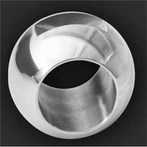
Introduction to the structure of the slurry valve
The slurry valve is based on absorbing and digesting advanced valve body technology at home and abroad to further update the valve body structure, sealing form, driving device and electrical control. The product has many advantages, such as simple structure, small size, light weight, low flow resistance, difficult media precipitation in the valve body, and convenient installation. At the same time, it has manual and electro-hydraulic operation functions. Electrical control: travel switch control, position display control, realizing the integration of mechanical, electrical, hydraulic, instrument and other multi-functional systems. This type of valve should generally be installed horizontally in the pipeline.
The structure and characteristics of the slurry valve:
a. Valve body structure and sealing method
The newly developed slurry valve is divided into two-clamp type and one-piece type, and the two-clamp valve body seal adopts the U-shaped and T-shaped composite structure of composite material configuration. The integral valve body is sealed with an O-shaped composite sealing ring structure, which overcomes the shortcomings of the original wafer valve using U-shaped gaskets that are easily displaced and deformed after being stressed, and the medium leaks. The ram adopts a knife-shaped structure, which solves the problems of loose valve closure and external leakage in the mortar sedimentation sealed tank.
b. The driving device is divided into manual operation and electro-hydraulic operation.
Manual device: simple operation, suitable for valves with small torque.
Electro-hydraulic device: suitable for valve devices with large torque, adjustable force and speed, and can be arbitrarily locked.
Applicable medium: mining, iron and steel industry-used for coal slurry, filter slurry, etc.
Purification device-used for waste water, mud, dirt and clarified water with suspended solids.
Paper industry-used for any consistency of pulp, material and water mixture.
Sugar industry-used for beet washing, syrup, juice, fruit juice, etc.
Food industry-used in washing and rinsing equipment, grain conveying equipment, mash, etc.
Power station ash removal-used for ash slag slurry.