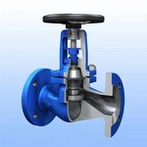
The discharge valve is designed for easy operation, free opening, flexible and reliable movement; simple assembly and maintenance of the valve disc, reasonable sealing structure, and convenient and practical replacement of the sealing ring. Structure: It is mainly composed of valve body, valve disc, sealing ring, valve stem, bracket, valve gland, handwheel, flange, nut, positioning screw and other parts. This type of valve should generally be installed horizontally in the pipeline.
Discharge valve equipment performance
1. Discharge valve, corrosion resistance:
Use medium such as water, acetone, alcohol, ammonia, barium carbonate, benzene (the temperature of WCB material is -29℃-425℃).
Use medium such as particles, oil, pulp, carbon dioxide gas (stainless steel material can be used at -60℃-232℃).
It is strictly forbidden to use fluorine-containing ionic liquids (such as HF, etc.), nor strong alkalis and phosphoric acid (temperature less than 150℃, concentration>30%).
The general working temperature of stainless steel is less than or equal to 150℃, and the pressure range is 0.6-2.5MPA. If it exceeds this requirement, please specify when ordering.
2. Discharge valve, corrosion resistance:
Polytetrafluoroethylene has excellent adhesion to metal, general tensile strength, and resistance to dilute acid and concentrated acid.
Use medium such as particles, oil, pulp, carbon dioxide gas (stainless steel material can be used at -60℃-232℃).
It is strictly forbidden to use fluorine-containing ionic liquids (such as HF, etc.), nor strong alkalis and phosphoric acid (temperature less than 150℃, concentration>30%).
The general working temperature of stainless steel is -5℃-225℃, and the pressure range is 0.6-1.6MPA. If it exceeds this requirement, please specify when ordering.
3. Discharge valve: The glass-lined equipment is a vitreous glaze with high silicon content.
It is made by coating the metal tire at a high temperature of about 900 degrees. It has good mechanical properties and corrosion resistance, can prevent the substitution of media and metal ions to affect the pollution of products, and the surface is smooth, wear-resistant, and has a certain thermal stability. In addition to phosphorus and phosphorus light medium, hydrofluorocarbon, hydrochloric acid, sodium hydroxide, potassium hydroxide, this valve can resist various acids, alkalis, salt solutions and organic solvents. A. Corrosion resistance: 1. It can resist general inorganic acid, organic acid, weak alkali solution (P≤60℃ PH≤12) and organic agent medium. 2. It is better than stainless steel in strong corrosive media such as hydrochloric acid, nitric acid, etc. It is strictly forbidden to use fluorine-containing ionic liquids (such as HF, etc.), nor strong alkalis and phosphoric acid (temperature less than 150℃, concentration>30%). B. Heat resistance, it is allowed to be used between -30°C and 240°C (temperature resistance is less than 120°C). C, with a smooth surface. Not easy to stick materials, easy to clean. E. Insulation: The impact resistance is as small as 2500 g/cm, so the impact of hard objects should be avoided during use. F. Withstand voltage 0.6MPA
Discharge valve maintenance
1. The discharge valve should be stored as a whole in a ventilated and dry warehouse. It is strictly forbidden to stack or store in the open air. Both ends of the discharge valve should be blocked by plates.
2. Before installation, carefully check the discharge valve, and remove the damage caused by the internal transportation and storage of the valve. Before installation, pay attention to whether the force of the screws of each part is balanced and whether the lifting (movement) is flexible.
3. The discharge valve should be installed in a place without severe vibration and impact, and in a place where the discharge valve is not damaged.
4. When the discharge is blocked, you can use a metal rod or a hard tool to dredge it. Pay attention to using a metal rod or a hard tool not to damage the contact surface of the valve disc and the sealing ring.
5. The alternating use of acid and alkali media (except neutralization reaction media) should be avoided as much as possible, so as not to shorten the service life.
6. According to the performance of the medium and the service period, the PTFE sealing ring on the top of the valve body and the PTFE sheet on the orifice plate should be checked frequently. If any damage is found, it should be replaced and reused in time.
7. If it is found that the discharge valve surface is damaged, it should be stopped immediately, and the affected area can be repaired with special materials, or commissioned by relevant production units.