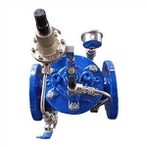
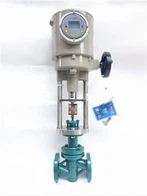
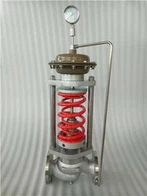
Water outflow from the pressure relief valve (pressure relief valve) may be caused by a variety of reasons. The following is a detailed analysis of this phenomenon
1. System pressure exceeds the set value
Reason
Overpressure operation: When the system pressure exceeds the set opening pressure of the pressure relief valve, the valve will automatically open and release the excess pressure. If there is liquid (such as water) in the system, water will flow out.
Pressure fluctuations: Pressure fluctuations in the system may cause the pressure relief valve to open and close frequently, causing intermittent water flow.
Example
Boiler system: If the boiler pressure is too high, the pressure relief valve will open and release steam or hot water.
Water supply system: When the water pump starts or stops, pressure fluctuations may cause the pressure relief valve to open briefly.
2. Faulty or damaged pressure relief valve
Reason
Poor valve disc sealing: The sealing surface between the valve disc and the valve seat is damaged or foreign objects are stuck, causing the valve to fail to close completely, causing leakage.
Spring failure: The spring of the pressure relief valve is fatigued or damaged and cannot provide sufficient closing force, causing the valve to be often open or not closed tightly.
Corrosion or wear: The corrosion or wear of the medium on the valve causes damage to the internal parts of the valve and affects the sealing performance.
Example
Long-term lack of maintenance: The pressure relief valve has not been inspected or replaced for a long time, and the internal parts are aged, resulting in leakage.
Medium corrosion: In a system containing corrosive media (such as acid and alkali solutions), the valve material is corroded, causing leakage.
3. Improper installation or setting
Cause
Wrong installation position: The pressure relief valve is improperly installed at the high or low point of the system, resulting in the medium not being able to be discharged normally or accumulating, affecting the performance of the valve.
Set pressure is too low: The set opening pressure of the pressure relief valve is too low, resulting in the valve opening under normal operating pressure, causing frequent water flow.
Back pressure effect: There is back pressure at the discharge port of the pressure relief valve, resulting in the valve being unable to close completely or the opening pressure increasing.
Example
Wrong installation direction: The installation direction of the pressure relief valve is opposite to the actual flow direction, resulting in the valve not being able to work properly.
Improper set pressure adjustment: During commissioning or maintenance, the set pressure is mistakenly adjusted lower, resulting in frequent valve opening.
4. Abnormal system operation
Reason
Startup or shutdown process: When the system is started or shut down, the pressure changes dramatically, which may cause the pressure relief valve to open briefly.
Overload operation: The system load is too large, causing the pressure to rise, exceeding the set value of the pressure relief valve.
Change in medium temperature: The increase in medium temperature causes the pressure to rise, triggering the pressure relief valve to open.
Example
Thermal expansion: In a hot water system, the increase in water temperature causes the pressure to rise, and the pressure relief valve opens.
Sudden power failure: When the water pump suddenly loses power, the system pressure drops sharply and then rises again, which may cause the pressure relief valve to operate.
5. Influence of external factors
Reason
Ambient temperature change: The increase or decrease in ambient temperature affects the system pressure and the physical properties of the medium.
Vibration or shock: External vibration or shock may cause the pressure relief valve to malfunction or be damaged.
Entry of impurities or foreign matter: Impurities or foreign matter in the medium enters the pressure relief valve, affecting the normal operation of the valve.
Example
Earthquake or construction vibration: External vibration causes the pressure relief valve to open erroneously.
Impurities in the pipeline: Welding slag, rust and other impurities in the pipeline enter the pressure relief valve, causing jamming or leakage.
Countermeasures
Check the system pressure
Confirm whether the system pressure exceeds the set value of the pressure relief valve, and adjust the system operating parameters if necessary.
Repair the pressure relief valve
Regularly check and maintain the pressure relief valve, replace damaged parts, and ensure that the valve is well sealed.
Adjust the installation and settings
Ensure that the pressure relief valve is installed in the correct position, the set pressure meets the system requirements, and the discharge port is unobstructed.
Monitor system operation
Monitor the system pressure and temperature in real time to avoid overpressure or overload operation.
Eliminate external interference
Eliminate external vibration, impact and other influencing factors to ensure a stable working environment for the pressure relief valve.