


Butterfly valves and gate valves are two common types of valves. They are significantly different in many aspects, such as structure, operation mode, actual application effect and use environment. Next, we will explore the differences between butterfly valves and gate valves in depth:
1. About the structure and the basic principle of its operation
Butterfly valve
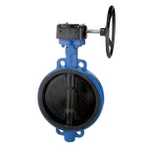
In terms of structure, the butterfly valve is mainly composed of a valve body, a valve stem, a butterfly plate and a sealing ring. The valve is round in shape, with a short axial length and a butterfly plate inside. The butterfly plate is a disc-shaped switch that can rotate around the axis of the valve body.
Operation mode: The butterfly valve uses a rotating butterfly plate to manipulate the flow of the medium. When the butterfly plate rotates about 90 degrees, it can control the opening and closing of the valve, or adjust the flow rate of the medium.
Gate
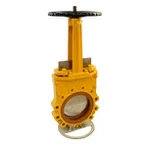
In terms of structure, the gate valve is composed of multiple parts, such as a valve body, a gate plate, a valve stem and a drive device. The gate plate is the opening and closing component of the gate valve, and its movement direction is perpendicular to the direction of the fluid. According to the difference in the structure of the gate, gate valves can be classified into two types: wedge type and parallel type. The wedge type gate valve is further divided into three different structures: single gate, double gate and elastic gate.
Operation mechanism: The gate valve can adjust the flow of the medium by moving the gate up and down. Once the gate is raised, the medium can flow freely; when the gate is lowered, the medium is cut off. Gate valves can generally only perform full open or full closed operations, and cannot be adjusted or throttled.
2. About the effect and function of use
Closing nature
Butterfly valve: Compared with gate valves, butterfly valves do not perform well in sealing performance, but they are more suitable for applications where the sealing standards are not strict. By using a specially designed three-eccentric or double-eccentric butterfly valve in a metal hard seal with an adjustment device, the sealing performance can be significantly improved under specific working conditions.
Gate valve: Since the gate can fit tightly on the valve seat, the gate valve has good sealing performance. In environments where high sealing is required, gate valves are usually the first choice.
Fluid resistance
Butterfly valve: When the butterfly valve is fully opened, it exhibits low fluid resistance. However, when the butterfly plate is partially opened, the resistance of the fluid will increase, and it is more likely to cause eddy currents and vibrations.
Gate valve: Since the media channel inside the valve body is directly connected, the fluid resistance of the gate valve is relatively low, and the medium also flows in a straight line. This results in the gate valve showing higher working efficiency in the process of transmitting fluids.
Opening and closing speed
Butterfly valve: Since the butterfly plate only needs to rotate about 90 degrees, the opening and closing of the butterfly valve can be completed quickly. Butterfly valves show their superiority in application scenarios where the medium needs to be disconnected quickly.
The opening and closing speed of the gate valve is relatively slow, because the gate plate needs to move up and down a certain distance to complete the opening and closing action. This leads to a longer working time of the gate valve.
3. Applicable occasions
Butterfly valve
Butterfly valves are often used in pipeline systems that do not have particularly strict requirements on pressure loss, such as waterproof systems and ventilation and air-conditioning systems.
Butterfly valves are also applicable in mud media and pipelines containing solid particles, because the movement of the butterfly plate is wiping and can remove impurities in the medium.
Butterfly valves are considered the best option for applications that require a short valve structure and fast opening and closing speeds.
Gates
Gate valves are often used in environments that require high sealing performance, such as gas pipelines, water supply projects, and wellhead equipment for natural gas extraction.
Gate valves can also be used in pipelines containing suspended particles because the gate can fit tightly on the valve seat to prevent leakage of the medium.
In pipeline systems that need to be fully opened or closed, gate valves have become a frequently selected option.
4. About price and maintenance
Pricing
Under the premise of the same material and caliber, the cost of butterfly valves is often more economical than that of gate valves. The reason why butterfly valves have attracted attention is that their design structure is relatively simple and the materials required are relatively limited.
Maintenance and maintenance
The maintenance process of butterfly valves is relatively simple, mainly because it has few core components and is easy to disassemble or replace.
Due to the complexity of the gate valve structure, its maintenance work is relatively cumbersome, so it requires more time and effort. However, gate valves usually have a longer service life because their sealing surfaces and valve seats are made of a variety of materials such as stainless steel and cemented carbide, which give gate valves high wear and corrosion resistance.
Taking all factors into consideration, butterfly valves and gate valves are significantly different in terms of their structural design, working mechanism, actual application effect, and applicable scenarios. In the process of selecting valves, the appropriate type of valve should be determined based on specific operating requirements and working environment.

Latest News
Contact Us
- Anfeng Village, Oubei Street, Yongjia County, Wenzhou, Zhejiang, China
- marketing@sqvalves.com
- +86-577-67159376
What Is The Difference Between A Butterfly Valve And A Gate Valve?
Jan 15, 2025
You Might Also Like


Send Inquiry