Valve channel area and flow rate
Flow has a direct relationship, and velocity and flow are two interdependent quantities. When the flow rate is constant, the flow rate is large, and the flow path area can be smaller; The flow rate is small, the flow area can be larger. On the contrary, the flow rate is small because the area of the channel is large. The head area is small and the velocity is large. The flow rate of the medium is large, the valve diameter can be smaller, but the resistance loss is large, and the valve is easy to damage. The high flow rate will produce 䴖 electric effect on the easy and explosive medium, resulting in danger; The flow rate is too small, inefficient and uneconomical. For large viscosity and explosive media, a smaller flow rate should be taken. The flow rate of oil and liquid with large viscosity is selected with the size of viscosity, generally 0.1~2m/s.
In general, the flow rate is known and the velocity can be determined by experience. Table 2-31 shows the common advice for various media. Through velocity and flow
The nominal size of the valve can be calculated.
When calculating the valve diameter according to the predetermined medium flow rate, it can be determined by the following formula
Valve channel area and flow rate (Figure 1)
Medium d valve diameter mmW - medium mass flow kg/hQ medium volume flow m3/h; p - Medium density kg/m3V Average velocity of the medium m/s.
The valve diameter is the same, its structure type is different, and the resistance of the fluid is not the same. Under the same conditions, the greater the resistance coefficient of the valve 諃 body through the valve, the more the flow reduction; The smaller the valve resistance coefficient, the flow rate through the valve, the less/less the valve resistance coefficient is small, only in the range of 0.1 to 1.5. Large diameter gate valve, the resistance coefficient of 0.2~0.5 shrinkage gate valve resistance coefficient is larger some of the resistance coefficient of the globe valve is much larger than the gate valve, generally between 4 and 7. Y-shaped globe valve (direct flow) resistance coefficient is the smallest, between 1.52. Forged steel stop valve resistance coefficient is the largest, even up to 8.
The resistance coefficient of the check valve depends on the structure: the swing check valve is usually 0.8~2, of which the resistance coefficient of the multi-disc swing check valve is larger; Lift check valve resistance coefficient maximum, up to 12.
The resistance coefficient of the plug valve is small, usually about 04~1.2.
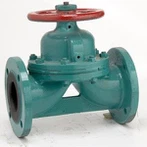
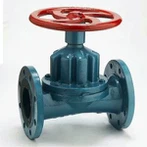
The resistance coefficient of diaphragm valve is generally about 2.3.
The resistance coefficient of butterfly valve is small, generally within 0.5.
The resistance coefficient of the ball valve is the smallest, generally about 0.1, the resistance coefficient of the above valve is the value of the valve in full open state.
1. 6 expansion joints, Dn-200, material: SS310
The inner pipe diameter is DN200. The HOLE spacing should be greater than 200mm. Check the data of BC HOLE
2. Material conveying valve WLF
Make it in the required size, no problem
3. Ball valve
DN-50 Length L=143mm(BC HOLE)
DN-40 Length L=133mm(BC HOLE)
4. Check valve
DN40 Length L=101mm(BC HOLE)
DN50 Length L=117mm(BC HOLE)
Does not meet the required length size, see if it can be used
5. Three-piece ball valve
DN40 Length L=110mm(BC HOLE)