Actuator
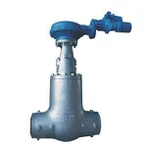
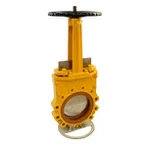
The actuator is an essential part of the automatic control system. Its function is to accept the control signal sent by the controller, change the size of the controlled medium, so as to maintain the controlled variable at the required value or within a certain range. Actuators can be divided into three categories: pneumatic, hydraulic and electric according to their energy forms. Pneumatic actuators use compressed air as an energy source. They are characterized by simple structure, reliable operation, stability, large output thrust, easy maintenance, fire prevention and explosion protection, and low prices. Therefore, they are widely used in chemical, paper, and oil production processes. It can be conveniently used with passive instruments. Even when using electric instruments or computer control, as long as the electric signal is converted to a standard air pressure signal of 20-100kPa through an electric-gas converter or an electric-gas valve positioner, a pneumatic actuator can still be used. Electric actuators have easy access to energy and rapid signal transmission, but have complex structures and poor explosion-proof performance. The hydraulic actuator is basically not used in the production process of chemical industry, oil refining, etc. It is characterized by a large output thrust