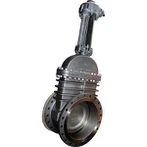
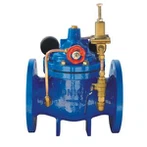
High-performance butterfly valves are a type of valve commonly used in industrial applications for controlling and regulating the flow of fluids, gases, or semi-solids in a pipeline. They are an advanced version of traditional butterfly valves, offering improved performance and functionality. Here are some key characteristics and features of high-performance butterfly valves:
Design: High-performance butterfly valves have a unique design that combines the advantages of both butterfly valves and ball valves. They typically feature a slim profile, with a circular disc or "butterfly" that rotates on a shaft to control the flow. The disc is mounted in the center of the pipe and is connected to an actuator or handle for operation.
Performance: These valves are engineered to provide superior performance in terms of tight shut-off capabilities, precise throttling control, and efficient flow regulation. They offer a high flow capacity with low pressure drop, making them suitable for applications where flow control and minimal turbulence are important.
Sealing Mechanism: High-performance butterfly valves are equipped with resilient or metal-seated seals that ensure tight sealing in both low-pressure and high-pressure conditions. The seals help prevent leakage and provide reliable shut-off.
Actuation Options: These valves can be operated manually using a handle or lever, but they are often designed for automation. They can be actuated using pneumatic, hydraulic, or electric actuators, allowing for remote or automatic control.
Materials: High-performance butterfly valves are available in various materials to suit different application requirements. Common materials include stainless steel, carbon steel, ductile iron, and exotic alloys. The choice of material depends on factors such as fluid compatibility, temperature, and pressure conditions.
Applications: High-performance butterfly valves find applications in a wide range of industries, including oil and gas, chemical processing, water treatment, power generation, HVAC, and more. They are used for flow control, isolation, and throttling in systems handling liquids, gases, or slurries.
Advantages: High-performance butterfly valves offer several advantages, such as compact design, lightweight construction, ease of installation, and lower cost compared to some other valve types. They also require less maintenance and offer quick and efficient operation.
It's important to note that the term "high-performance butterfly valve" can vary slightly across manufacturers, and specific features and capabilities may vary between different models and brands.